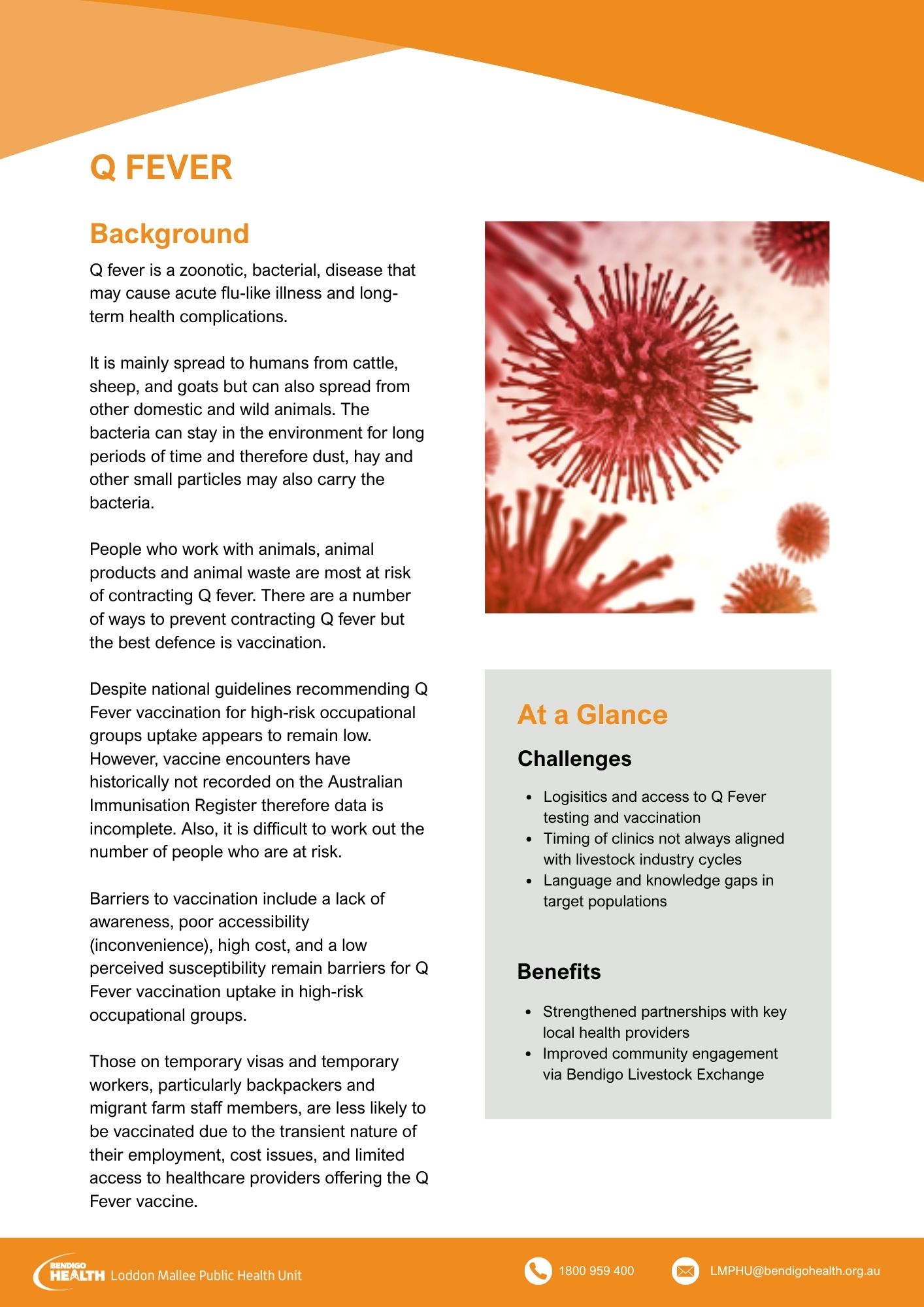
Q fever is an infection caused by the bacterium Coxiella burnetii. It is spread from animals to humans; there is no evidence of spread between humans. It is spread to humans by breathing in contaminated air or dust, particularly in environments where cattle, sheep and goats are present.
Symptoms
It Q fever can cause a severe influenza-like illness, which can include symptoms like high fevers, drenching sweats, severe headaches, joint and muscle aches, and extreme tiredness.
Some people can develop hepatitis (liver inflammation) or pneumonia (lung infection), and long-term health issues like chronic fatigue syndrome or endocarditis.
Who is at risk?
Anyone who works or enters workplaces with cattle, sheep, goats, or animal products are at a higher risk of Q fever. Even people who do not have direct contact with animals can be infected by breathing in the bacteria from the dust or air. This includes people living near livestock farms and the family members of those in high-risk jobs (from the clothing, boots, or equipment).
High-risk Jobs
Abattoir and meat workers
Livestock and dairy farmers
Farm and wildlife workers
Shearers
Veterinarians
How is Q fever prevented?
Vaccination is the most effective way to prevent Q fever infection. It is recommended for those who work, live in, or visit high-risk environments, such as farms, saleyards, or abattoirs.
To help reduce your risk
Wash your hands and arms with soapy water after contact with animals
Cover wounds with waterproof dressings when handling animal products
Separately wash dirty workplace clothing
Get vaccinated
Talk to your doctor to find out if the Q fever vaccination is right for you.
Q fever is an infectious disease that is spread from animals to humans, there is no evidence of human-to-human transmission.
Q fever can cause acute conditions like pneumonia and hepatitis, long-term complications like endocarditis, chronic fatigue and vascular infections, especially in people with underlying medical conditions.
People who work with animals, particularly cattle, sheep and goats, or animal products are at a higher risk of Q fever.
Early diagnosed Q fever can be treated with antibiotics.
You must be tested for the Q fever immunity before receiving the vaccine.
Contact your GP (local doctor) to discuss the Q fever vaccine.
See the list of Q fever vaccination providers in the Loddon Mallee region on this webpage below.
For Q fever vaccine recommendations, pre-vaccination screening, efficacy and safety of the vaccination, please visit the Department of Health website and the Australian Immunisation Handbook.
For new providers: Clinics that want to be added to the list of Victorian Q fever vaccine providers, should complete the Q Fever Provider Form and submit to [email protected].
CSL have developed a guide for immunisation providers with tips and advice on establishing and conducting Q fever vaccination clinics. It also provides advice on how these clinics may be further improved or expanded. You will need to log in or register to access these resources.
|
Name of the provider |
Contact details |
Accepting new patients |
Additional information |
|
Brooke Street Medical Centre, Woodend |
03 5427 1002 |
Yes |
Vaccination provided only on Mondays |
|
Campaspe Medical Centre |
03 5484 4480 |
Yes |
|
|
Charlton Medical |
03 5477 6888 |
Yes |
|
|
Deakin Medical Centre, Mildura |
03 5022 1488 |
Yes |
|
|
Dove Medical Centre, Echuca |
03 4411 7855 |
Yes |
|
|
Echuca Moama Family Medical Practice |
03 5480 6001 |
No |
|
|
Heathcote Primary Health |
03 5431 0888 |
Yes |
|
|
Irymple Medical Centre |
03 5024 5746 |
Yes |
|
|
Kyneton Medical Centre |
03 5422 1397 |
Yes |
|
|
Lucan St. Medical, Bendigo |
03 4416 1044 |
Yes |
|
|
Neal Street Medical Clinic |
03 5483 3333 |
Yes |
|
|
Onyx Medical Centre, Mildura |
03 5022 9104 |
Yes |
|
|
Rich River Health Group, Echuca |
03 5480 6700 |
Yes |
|
|
Romsey Medical Centre |
03 5429 5254 |
Yes |
|
|
Swan Hill Primary Health Centre |
03 5033 9900 |
Yes |
|
|
White Hills Medical Practice |
03 5442 3761 |
Yes |
|
Note: Vaccination against this disease is not funded under the National Immunisation Program, nor by states and territories. Speak to your doctor or employer about the costs involved. Costs are also tax deductible for most at-risk occupations (see ATO Office advisory for further information).
To speak to the Loddon Mallee Public Health Unit please call 1800 959 400 or email [email protected]